Cinematic content built on your game’s lore — event trailers, seasonal videos, hero stories — at the pace of a live service, not once a year at release. The engine keeps the canon of your universe in every frame.
Every season, event and battle pass needs video support — yet CG production costs millions and takes months. As a result, a game’s living content is backed only by static art and in-game captures. AXIOMA closes the gap: cinematic videos built on your universe’s canon — in nights, not quarters. Heroes, vehicles, environment and palette are locked to references and never «drift» from clip to clip.
From your art book and game assets the engine builds a «digital canon»: vehicle proportions, armor materials, faction light signatures, hero archetypes. Every generated frame is checked against the canon — lore-police is built into the pipeline.
Opening scene of a seasonal event: the universe wakes up. Light, vehicles and environment — by the title’s canon.
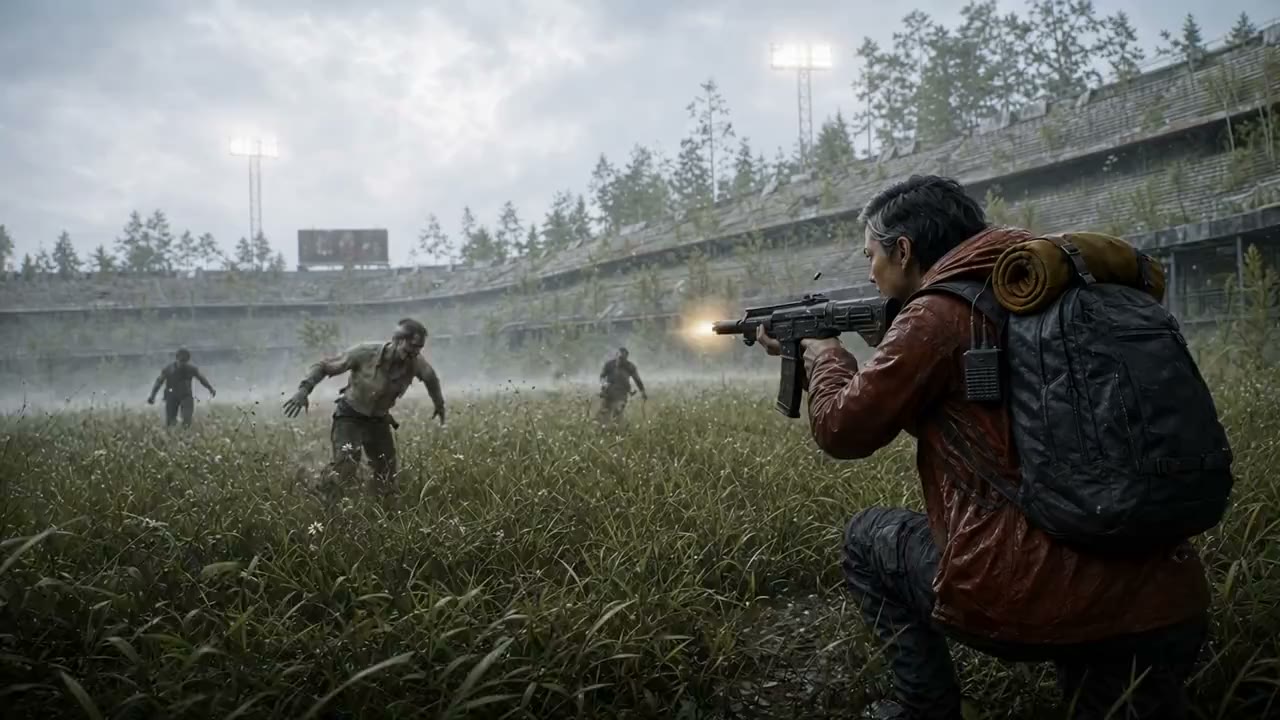
A choke point, momentum, weapons in hand stay stable — cinematic action without a CG farm.
The game world as the set of a story: concourse, crowd, rhythm. Every frame reads as your universe.
Large-scale mechanics and destruction — what a cinematics studio used to render over months, shot here in one night.
The relay finale — the climax of the event’s story. A bridge to a tournament announcement or season launch.
60–90 seconds of cinematics: a new threat, a new map, a new boss. Tone of a CG cinematic, delivered in nights.
Vertical mini-episodes based on character lore — a serial hook that keeps the audience between updates.
Season skins and vehicles in staged scenes — not a menu showcase, but a film about who you’ll become.
Tournament announcements and highlights in the universe’s style: teams as factions, the final as a lore battle.
Plus a swarm of short variations of each video for platforms — Shorts, Reels, VK Clips, Discord and in-game screens.
Hero stories ship like a series — players return not only for rewards but for the story. Lore stops sitting as dead weight in a wiki.
A cinematics studio costs millions per minute. The pipeline ships a season’s volume for the price of a single shooting day — with no render-farm queue.
A new meme in the community? A patch changed the meta? A response video — overnight, while the topic is hot. That reaction speed is something classic production physically doesn’t have.
A studio’s main fear — «the neural net will draw a game that isn’t ours». So canon here isn’t a wish but a gate: a frame that fails the universe-conformance check never reaches the edit.
Vehicles, costumes, weapons and heroes are locked to references from your game models — proportions and materials don’t drift.
The palette, light and shape of each faction is a separate profile. Blue is ally, red is enemy: the viewer reads the lore without words.
The studio’s narrative designer approves scripts and final cuts — the engine executes, you own the canon.
The studio hands over the art book, models and references. The engine builds the universe’s digital canon. 3–5 days.
A trailer for the nearest event for approval — edits in hourly iterations, sign-off by the narrative team.
A season plan: trailer, hero episodes, pass showcases, tournament promos. Production runs in parallel with your pipeline.
Each video becomes a swarm of platform variations; metrics feed back into the loop, weak formats are switched off.
Five scenes of one universe: field, chase, concourse, destruction, finale. A clean engine run in one night — weapons, hands and large-scale mechanics stay stable.
Discuss a pilot for your title Other formats