Your product doesn't just "sit in the corner of the clip" — it lives inside a story the viewer watches to the very end. Every scene on this page was generated by our engine in minutes.
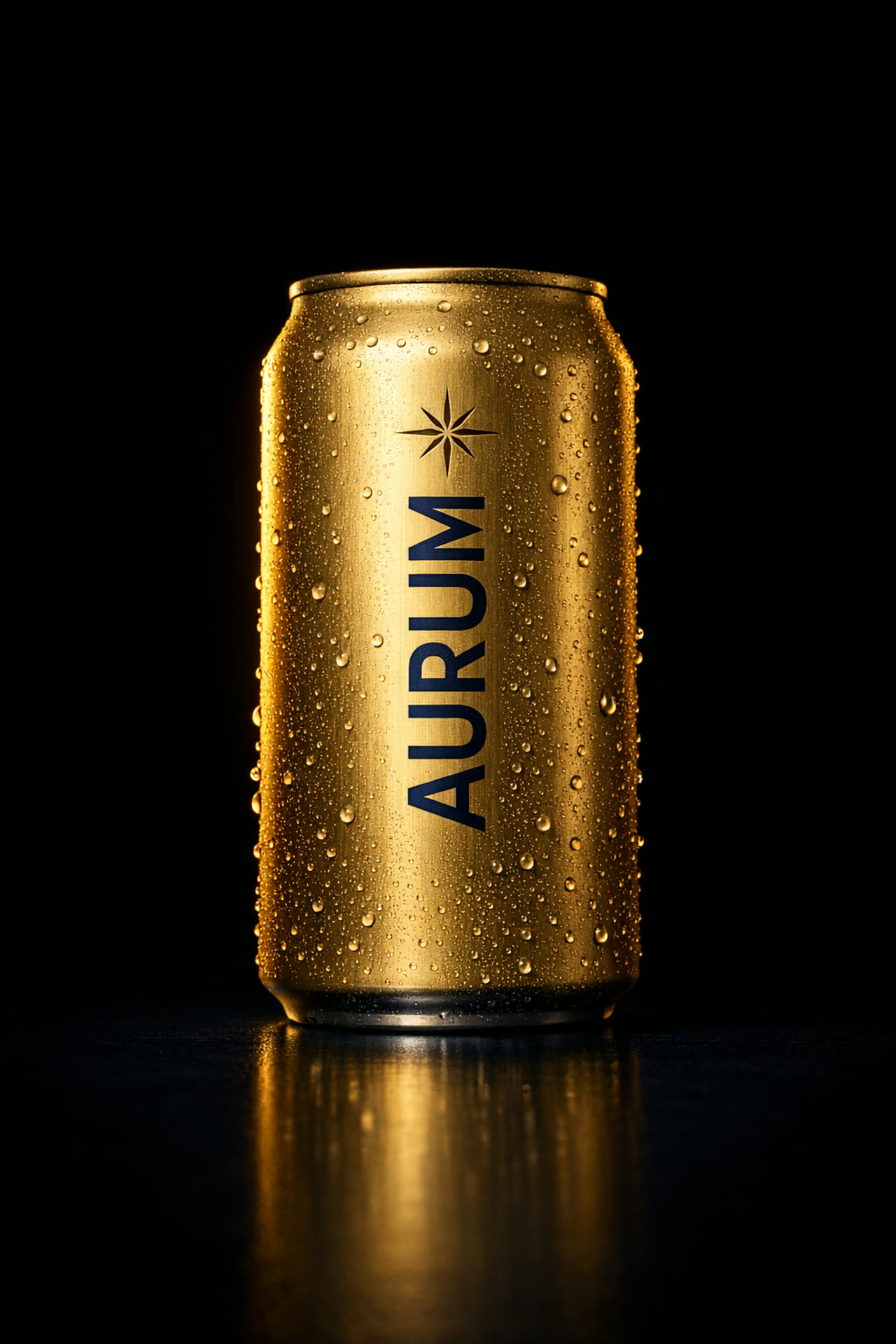
Classic product placement costs as much as an airplane wing and requires a full film crew. AXIOMA generates a cinematic story around your product: the hero, the city, the lighting and the palette are all built around the brand's identity. Below is a live example: the fictional energy drink AURUM, from the reference can to the pack-shot.
We lock in a "digital reference" of the packaging: proportions, material, logo, lighting. From there, every scene is built from this reference — the product stays itself in any frame. It's the same principle we use to keep a hero's face consistent across a thousand clips.
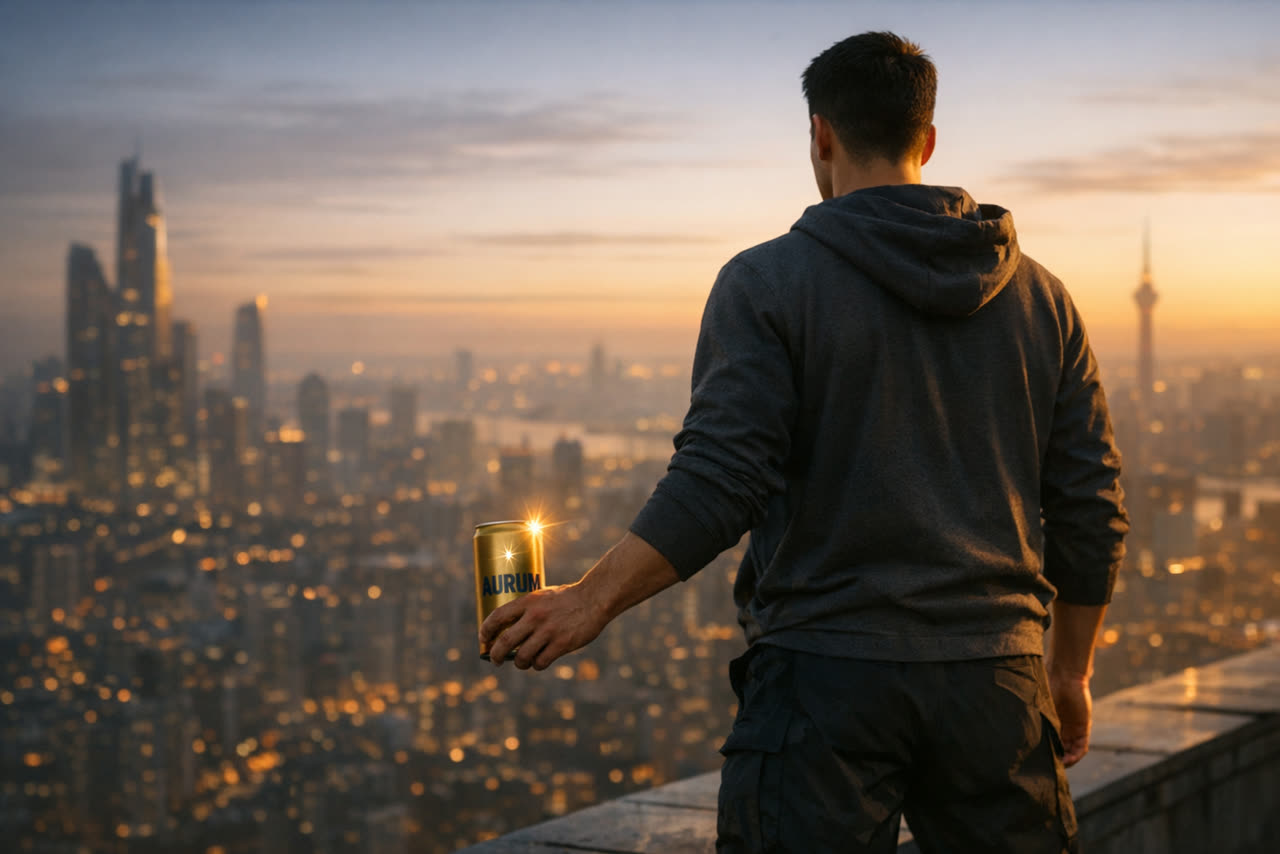
Integration is dosed: in some shots the product flickers through the environment, in others it's in the hero's hands, in others it fills the entire frame. The viewer doesn't feel advertised to, yet the brand is present in every second.


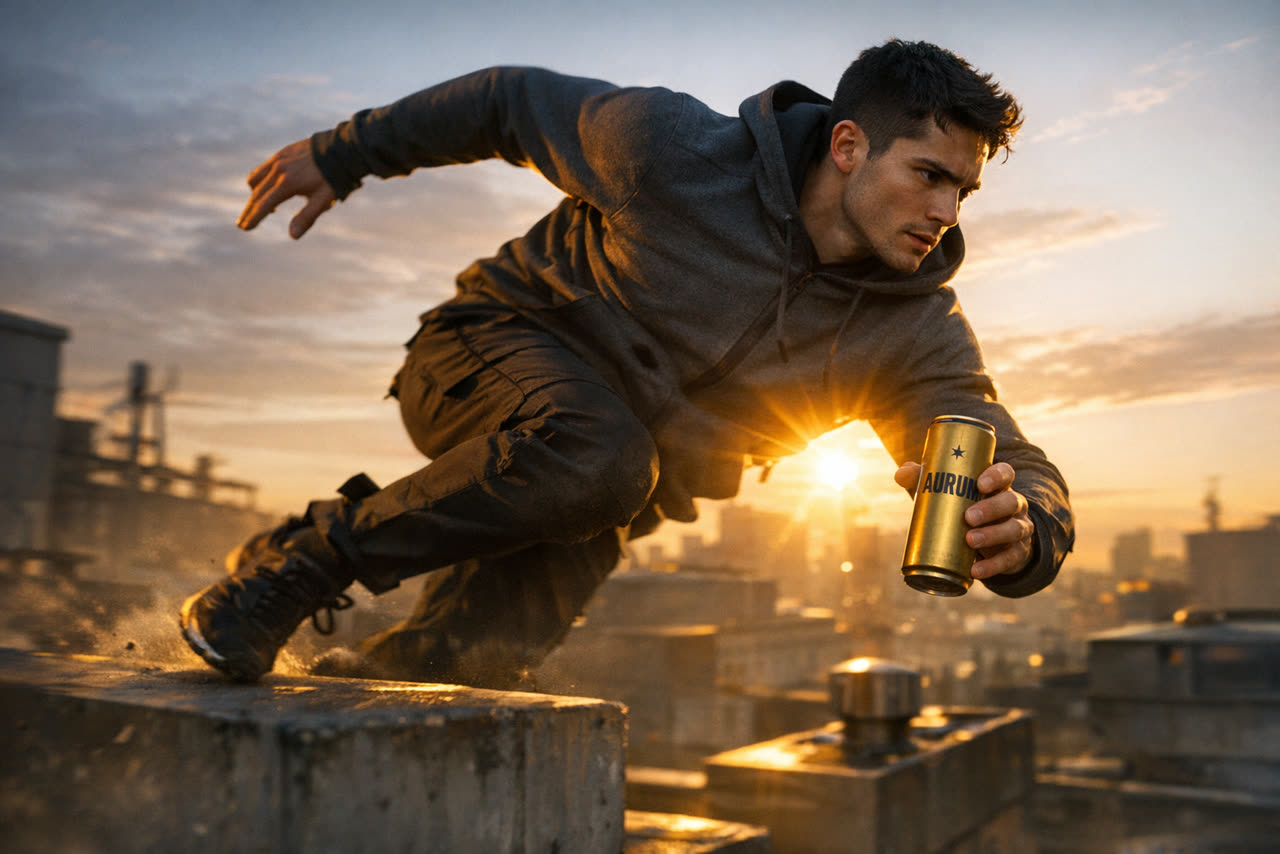
A rooftop at dawn, the hero with the product in hand. The viewer doesn't yet know it's an ad — they're already watching a film.
Parkour across the city. The product is part of the momentum, not a pause in it.
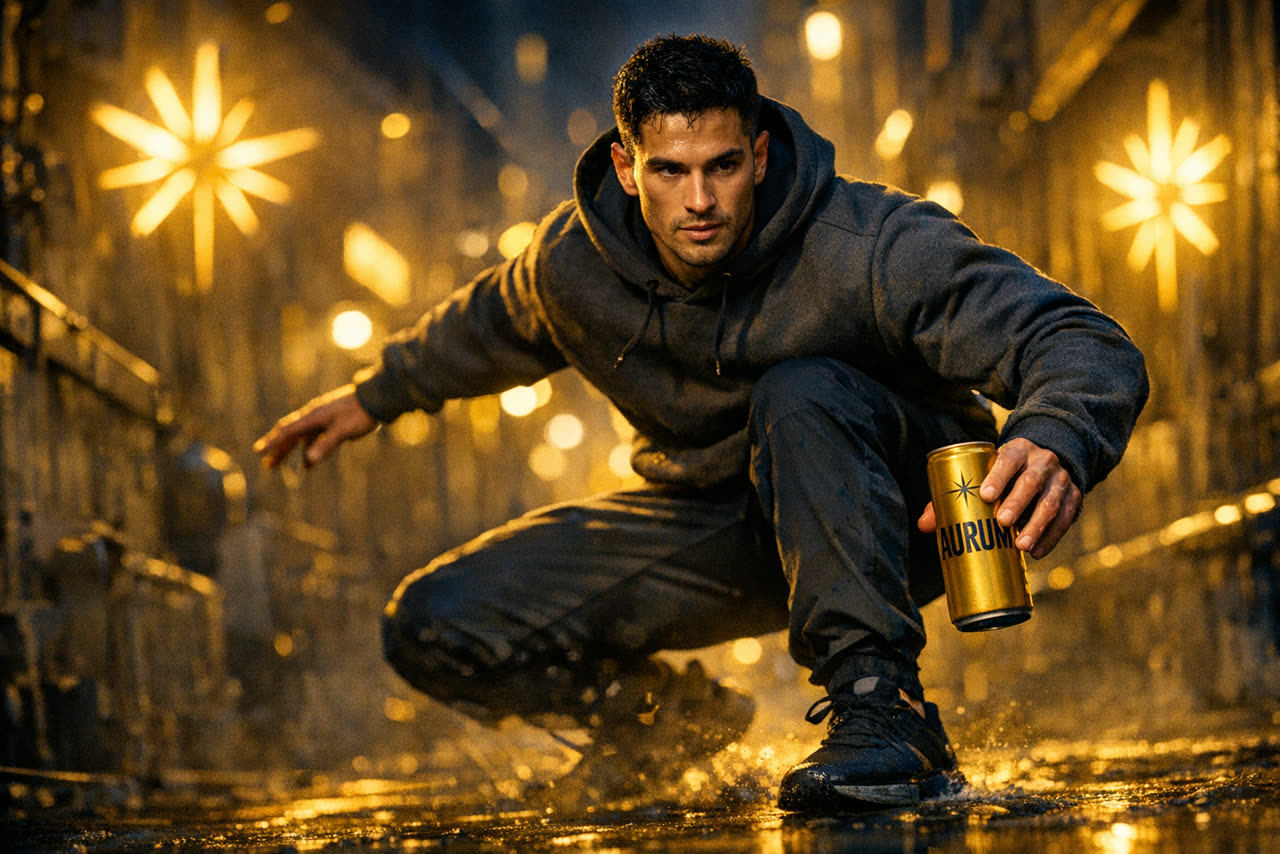
A neon alley in the signature gold and navy. The environment itself "speaks" the brand without a single logo.
A slow-motion sip, rim light, a burst of energy. The peak of the emotion belongs to the brand.
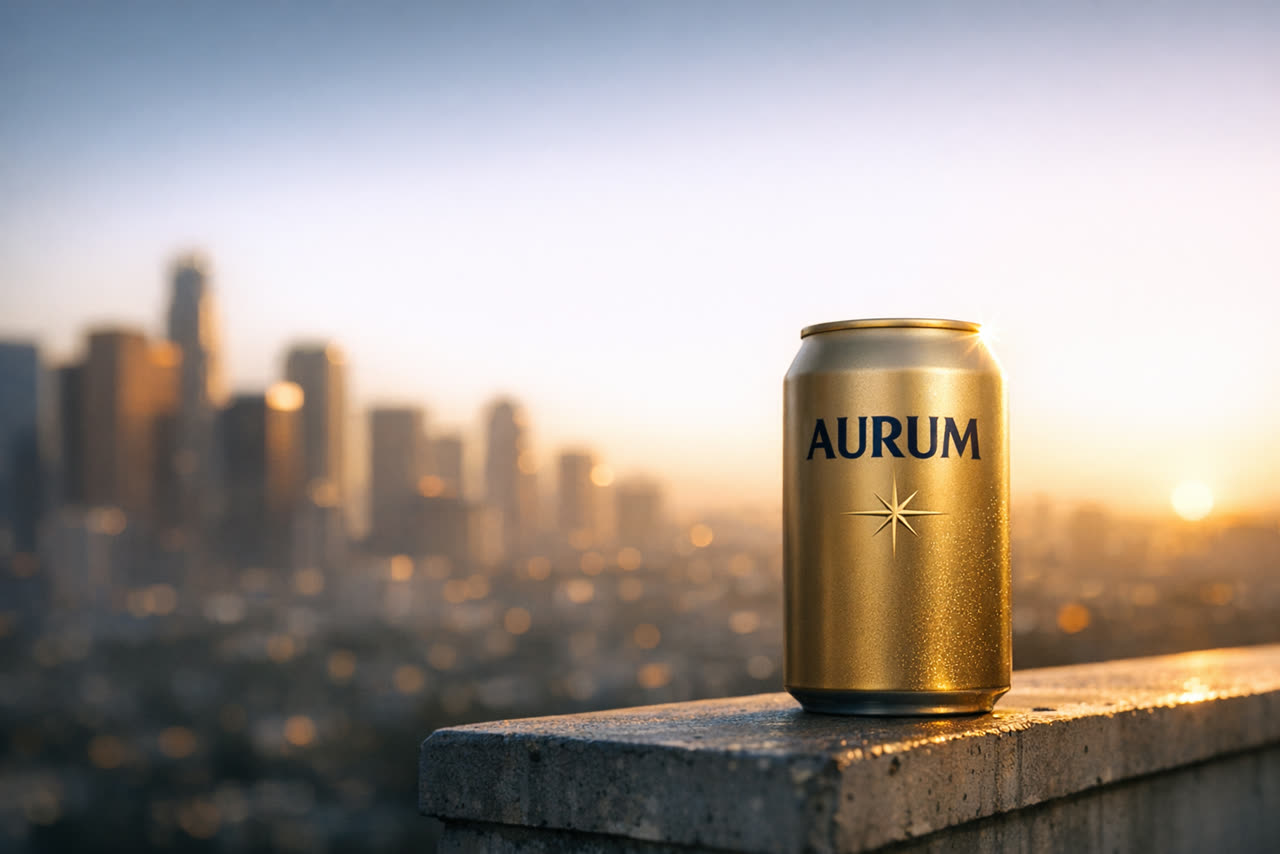
The can in close-up against the dawn-lit city. Space for the logo and tagline — conversion starts here.
The story is built around the brand's meaning core — not "buy this," but "this is who you are when you're with us." For AURUM, that's energy, control and status.
The hero conquers the city — the product is present in every leap. The association is built through action, not a slogan.
The frame's palette is the signature gold and navy. Even without a logo, the viewer "recognizes" the brand through the environment.
The story's emotional peak coincides with a close-up of the product. It's a memory anchor: the emotion sticks to the packaging.
The clip is built on the laws of short film: a hook in the first 2 seconds, escalating action, an emotional peak, a clean finish. The viewer is held by the story — and the brand rides along for free.
Golden rim light and dawn highlights "spotlight" the product in every frame — the eye finds it on its own.
The environment is colored in the signature tones — the brand is present even when the product isn't in frame.
The logo appears three times: the statement, the climax, the pack-shot. Enough to be remembered, few enough to avoid annoyance.
This is the key difference from classic production: an approved story becomes a template. The engine swaps heroes, cities, times of day and hooks — and ships dozens of variations for A/B tests and different platforms. The cost of a variation is a fraction of a percent of a shooting day.
In the final cut, the clip gets three sound layers: a signature music track written for the scene's dramaturgy; a voice — the tagline and offer at the climax and pack-shot; and the sound design of the action. The voice is cast for the brand: from an energetic announcer to a recognizable ambassador's timbre.
The track is generated for the runtime and the story's peaks — the beat lands on the edit cuts.
The tagline and offer play at the climax and on the pack-shot. Correct stress, the right intonation, any language.
Footsteps, the city, the can opening — the detail that makes the generation indistinguishable from live footage.
The swarm is assembled for each platform's format: 9:16 for verticals, 16:9 for pre-rolls and Smart TV, 1:1 for feeds. One story — every channel.
Completion rates, pack-shot CTR, brand-lift by segment. A swarm of 50 variations is 50 hypotheses: scale the winners, switch off the weak ones.
A script edit, a new hook or a different hero — the rebuild takes hours. The campaign learns from its own data in real time.
The packaging reference is locked — proportions, material and logo don't "drift" between scenes and variations.
Every frame is checked against the brand book: palette, lighting, mood. Nothing off-brand goes to air.
A stop-list of topics and scenes at the script level: the product won't end up next to anything the brand can't stand beside.
Every hero and location is generated — no third-party rights, no actor releases, no royalties.
You provide the packaging and brand book. We lock the digital reference and the environment palette. 1–2 days.
Dramaturgy built around your meaning core + a pilot for approval. Edits come in hourly iterations. 3–5 days.
The engine ships the approved story in dozens of variations for platforms and audience segments.
The campaign runs, the data comes back, the swarm rebuilds around what works. The cycle is a week.
Anyone can generate one beautiful frame. Holding the product, the hero, the palette and the dramaturgy across a thousand clips is a pipeline: references, style-gate, quorum quality checks and directorial logic in the prompts. That pipeline is what you rent — not "access to a neural network."
A precise quote for your volume is in the Axioma Console campaign calculator: from 100 to 5000 clips, three model classes, volume discounts.
This page is a live case study: the fictional brand AURUM went from a reference can to five scenes in a single day of the engine's work. The final clip, with sound and scene chaining, will appear here once it's assembled.
Discuss an integration Campaign calculator